01
One box
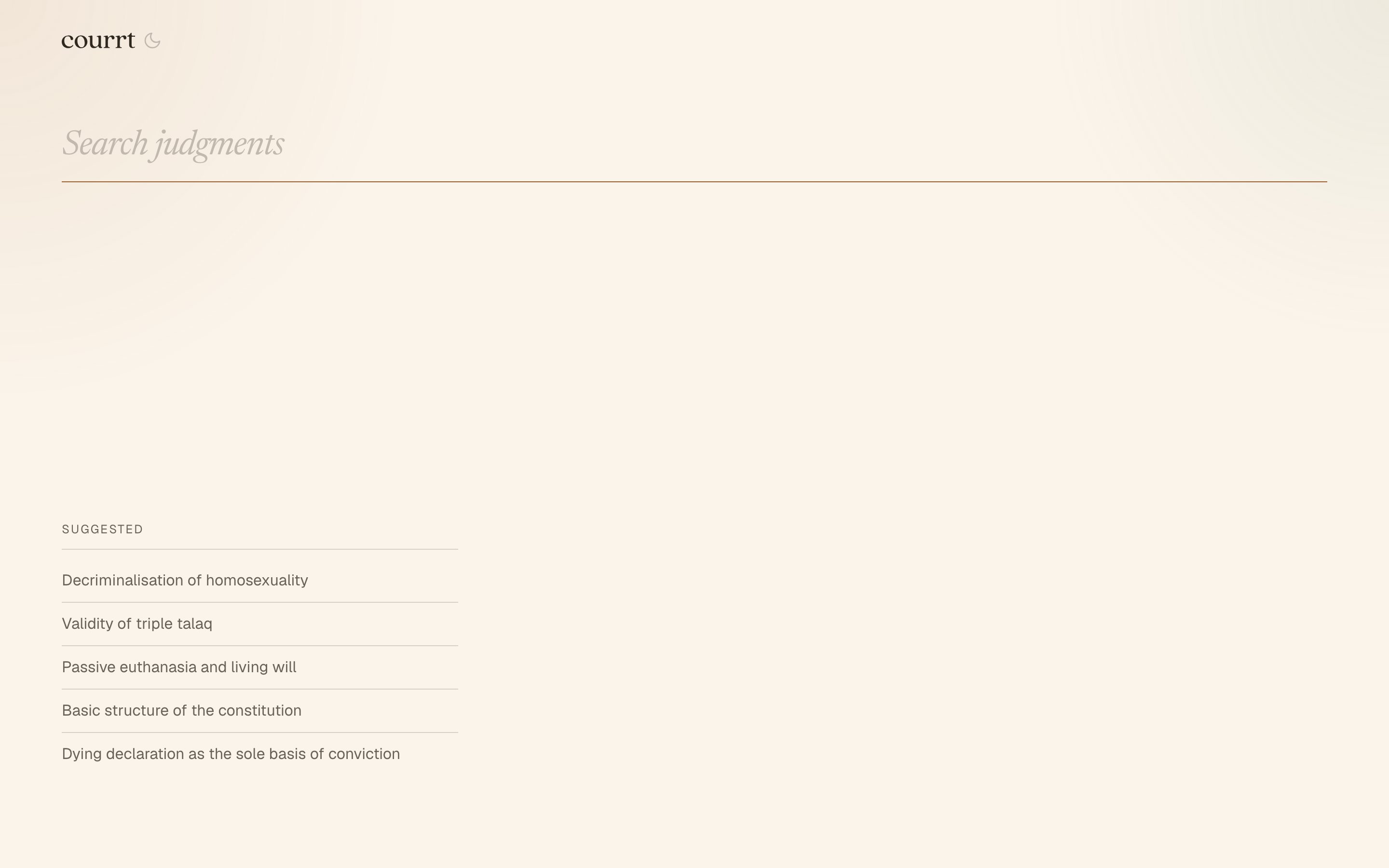
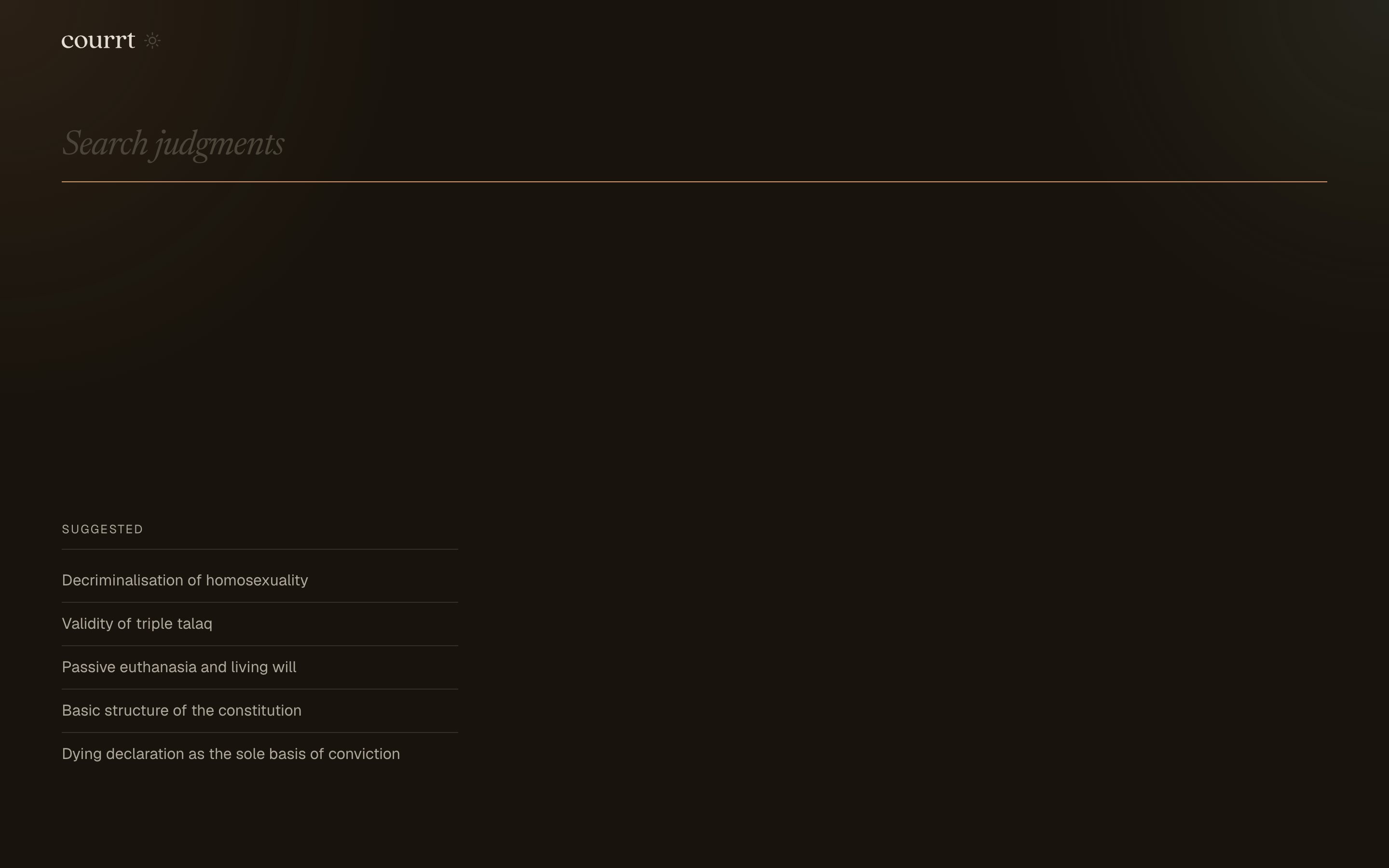
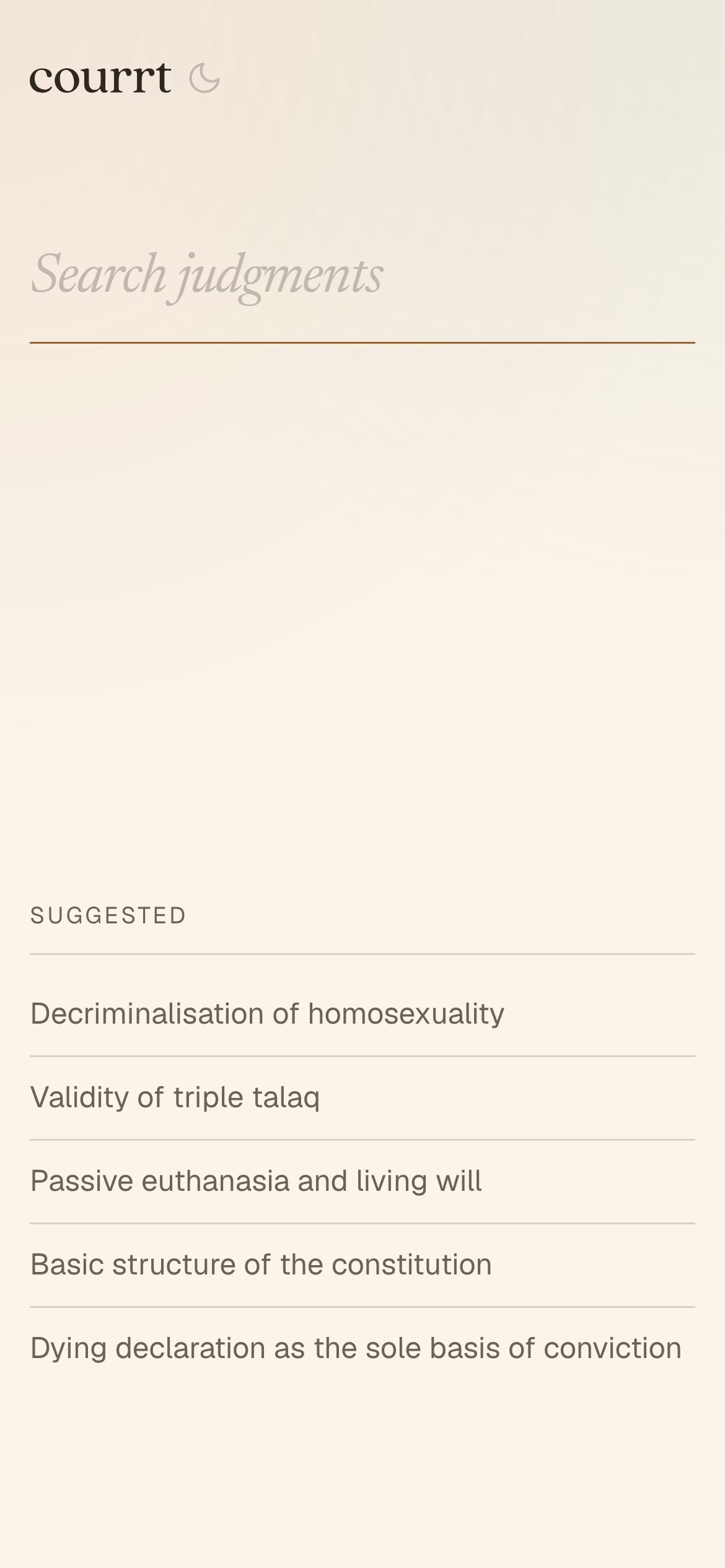
The homepage is a search field and five suggested searches. Nothing else.
internal
Courrt is ours. It's a search engine for Indian case law: Supreme Court and High Court judgments, each one traced back to the official court PDF.
We did all of it: the product design, the website and the engineering.
01
The homepage is a search field and five suggested searches. Nothing else.
02
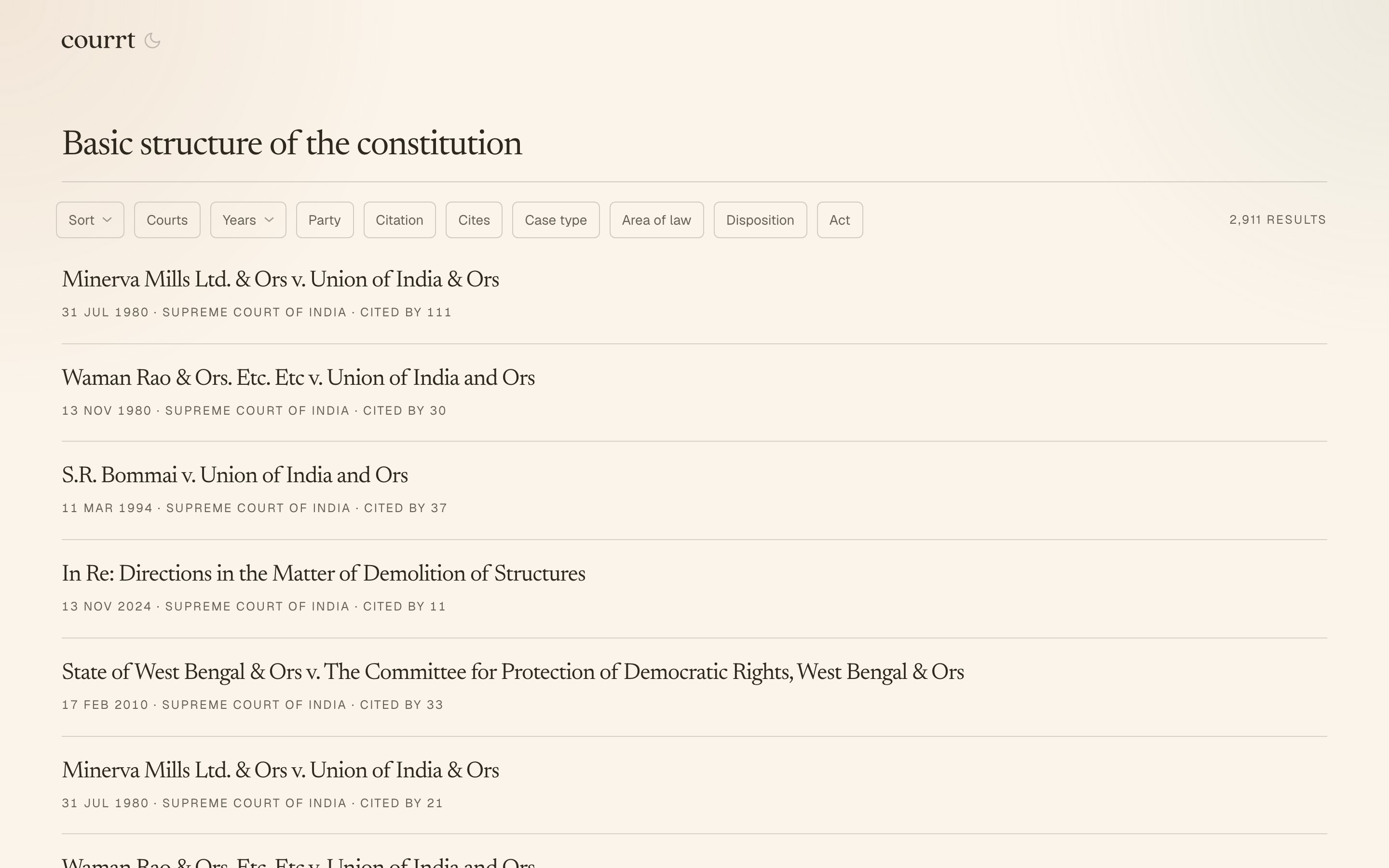
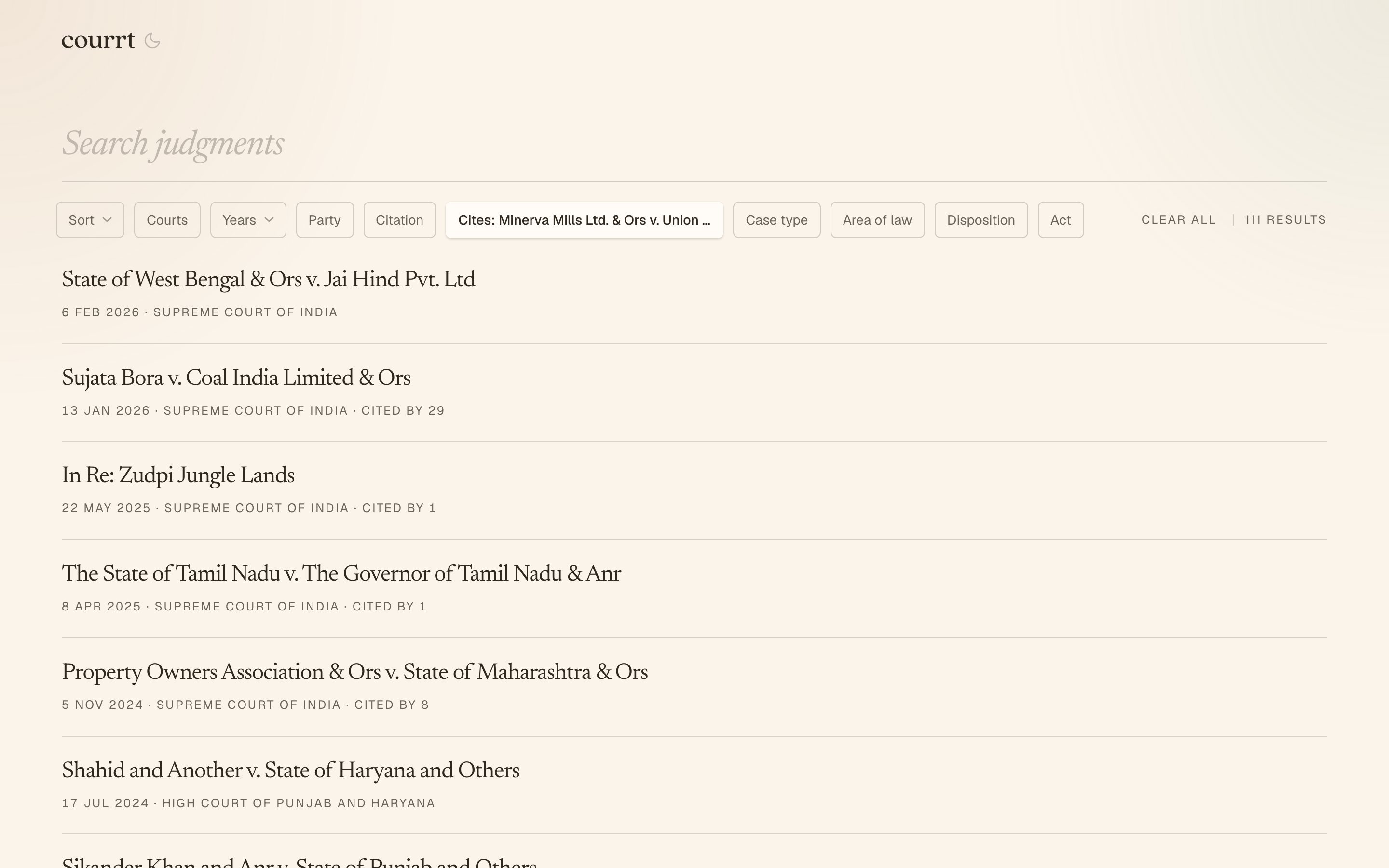
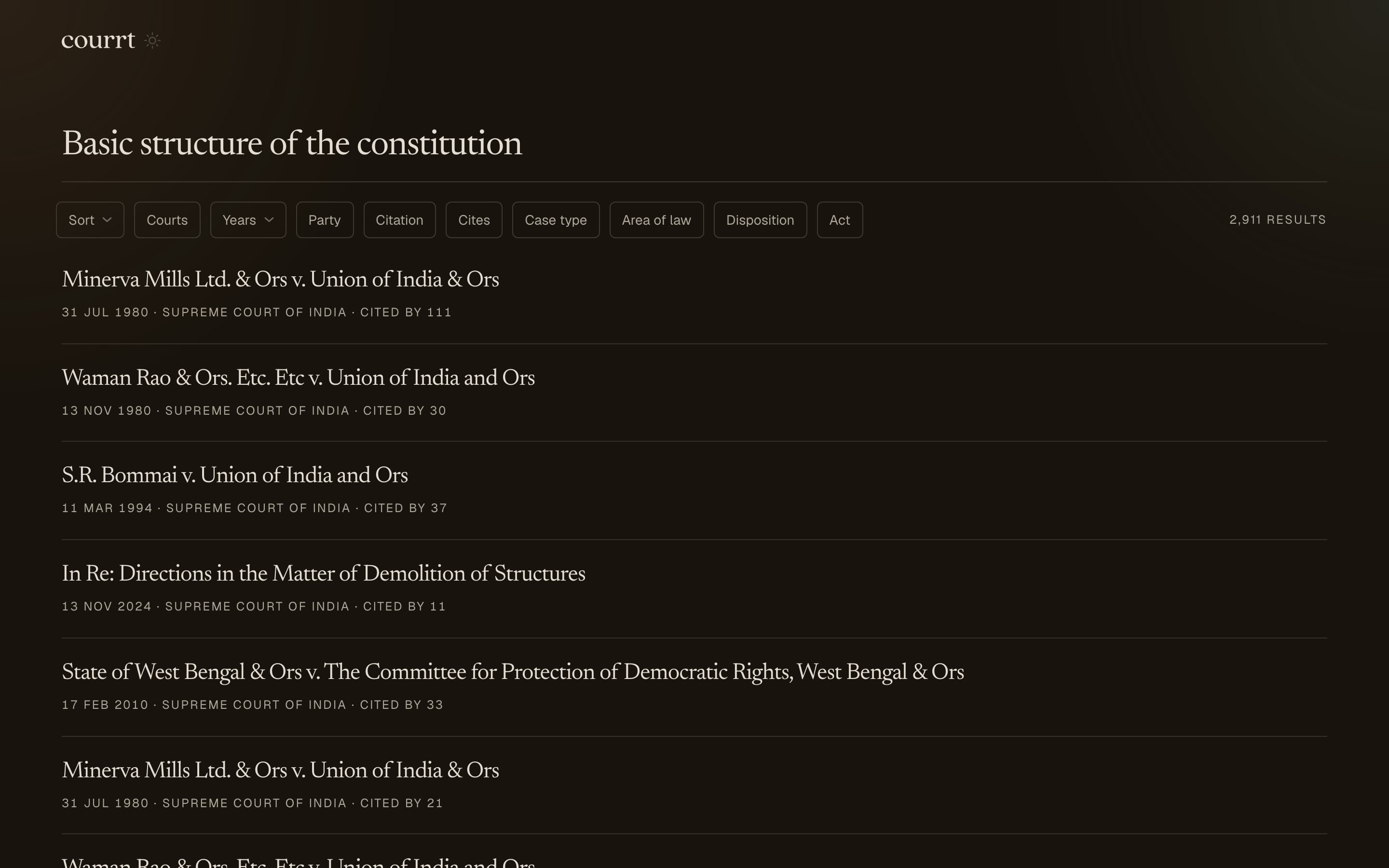
Each result shows the case name, date, court and citation count, with filters right above the list to narrow by court, year, party, act or disposition.
03
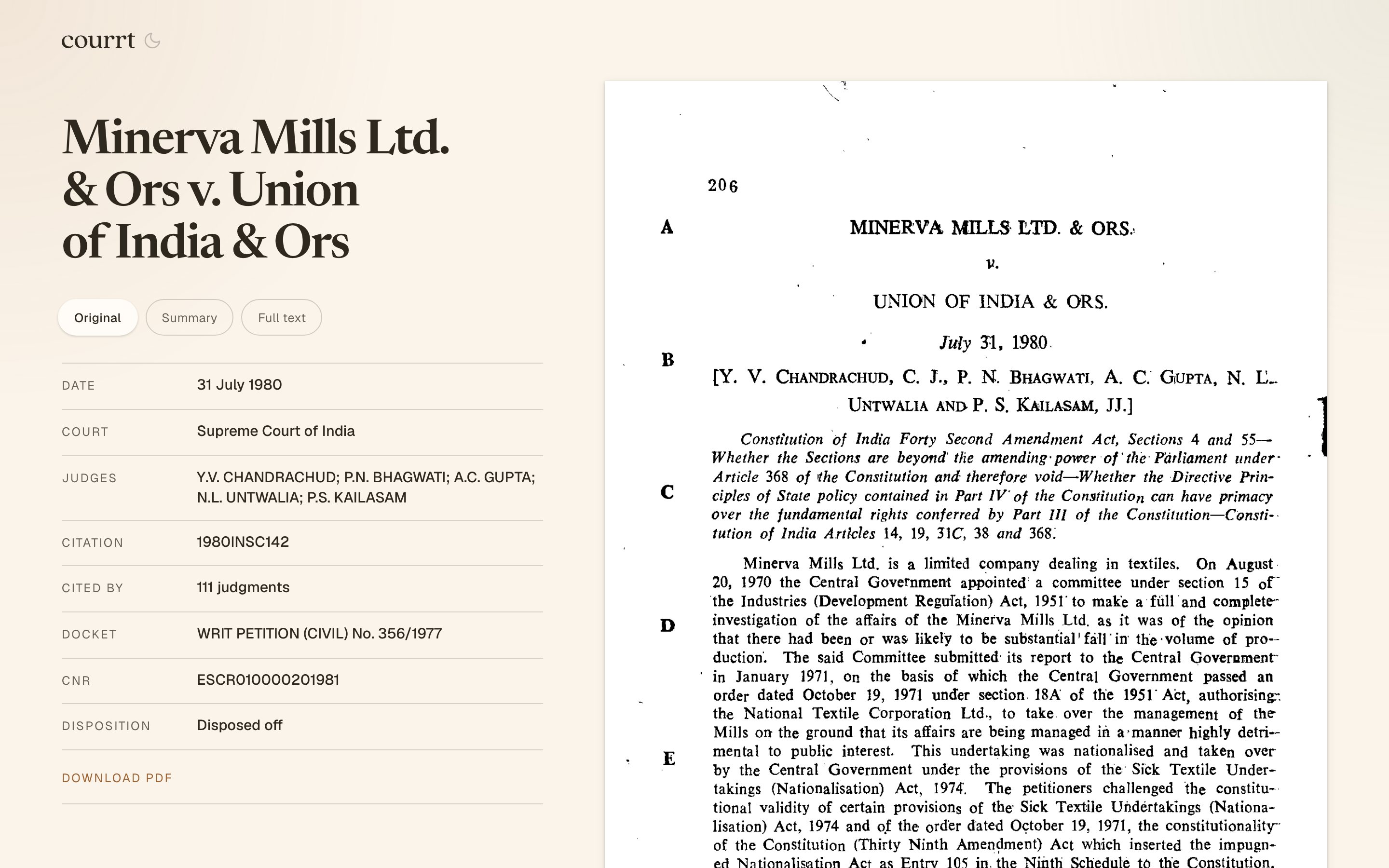
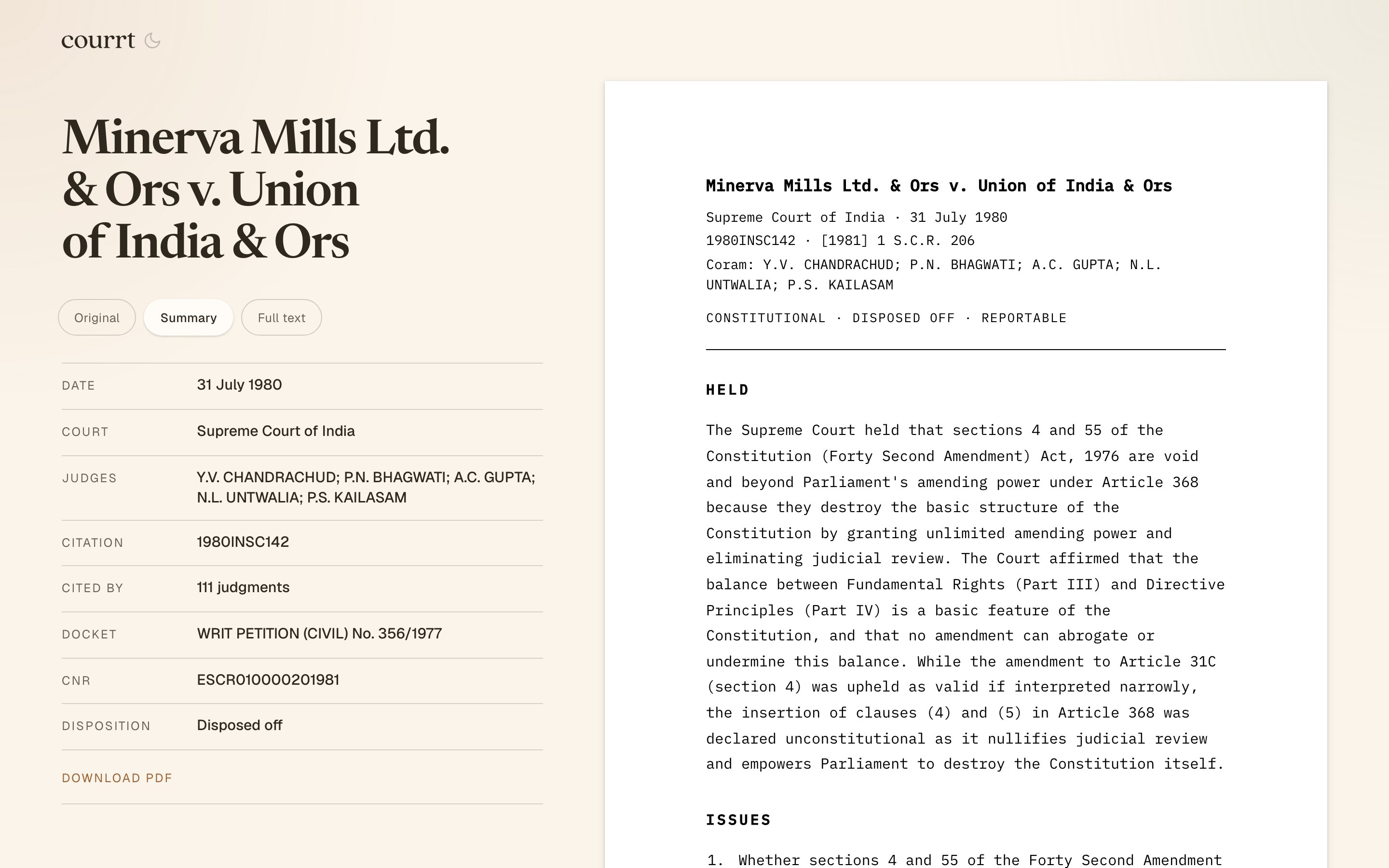
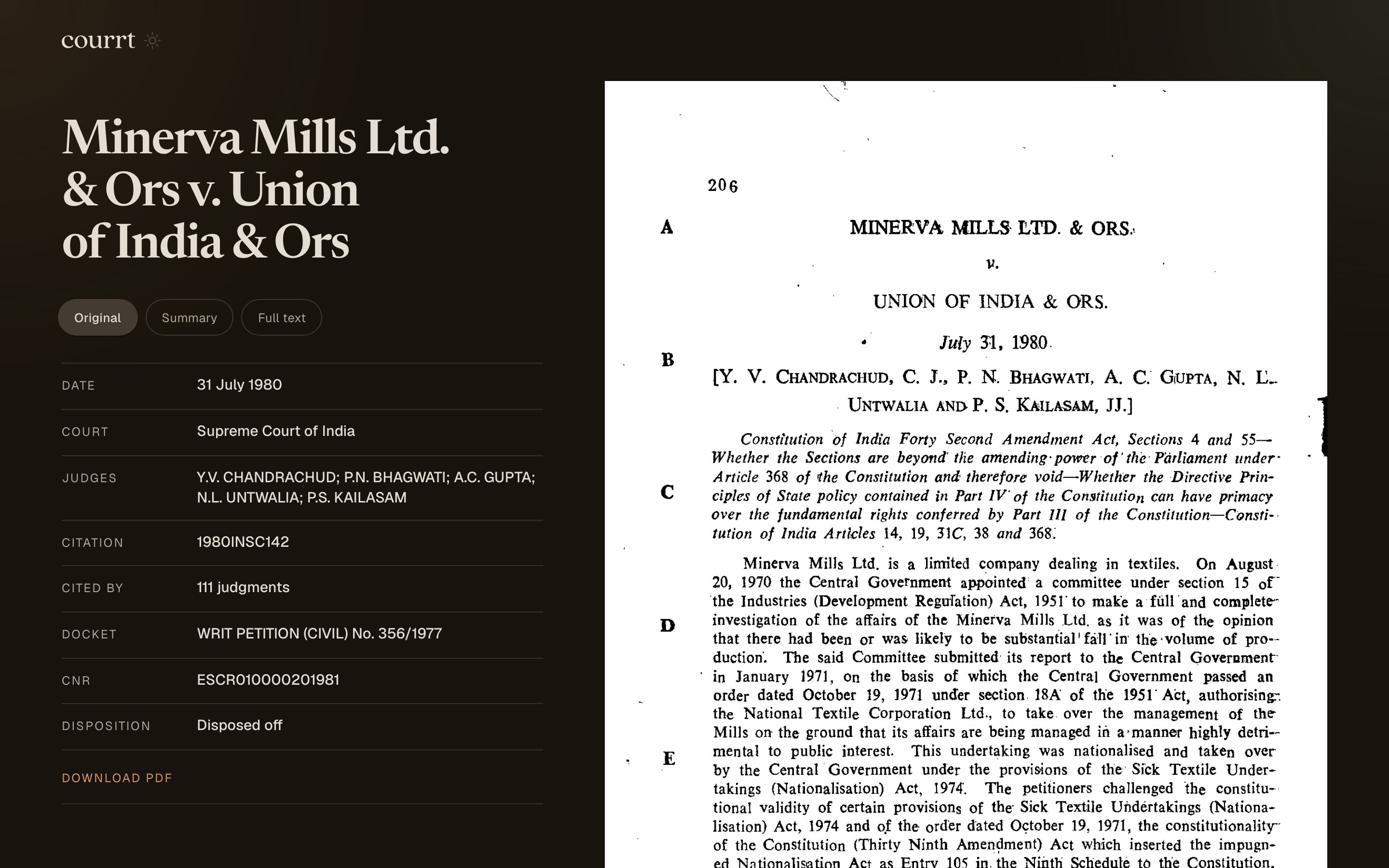
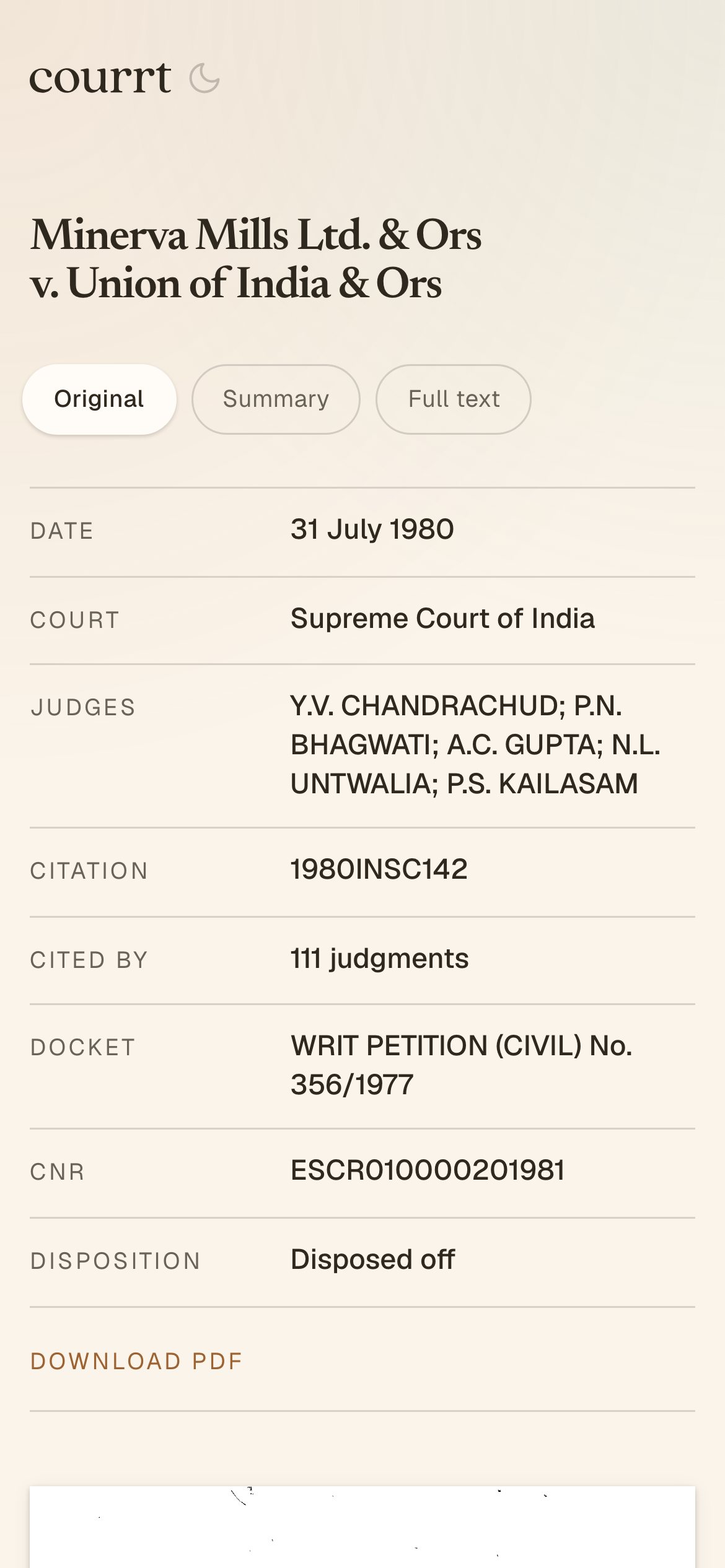
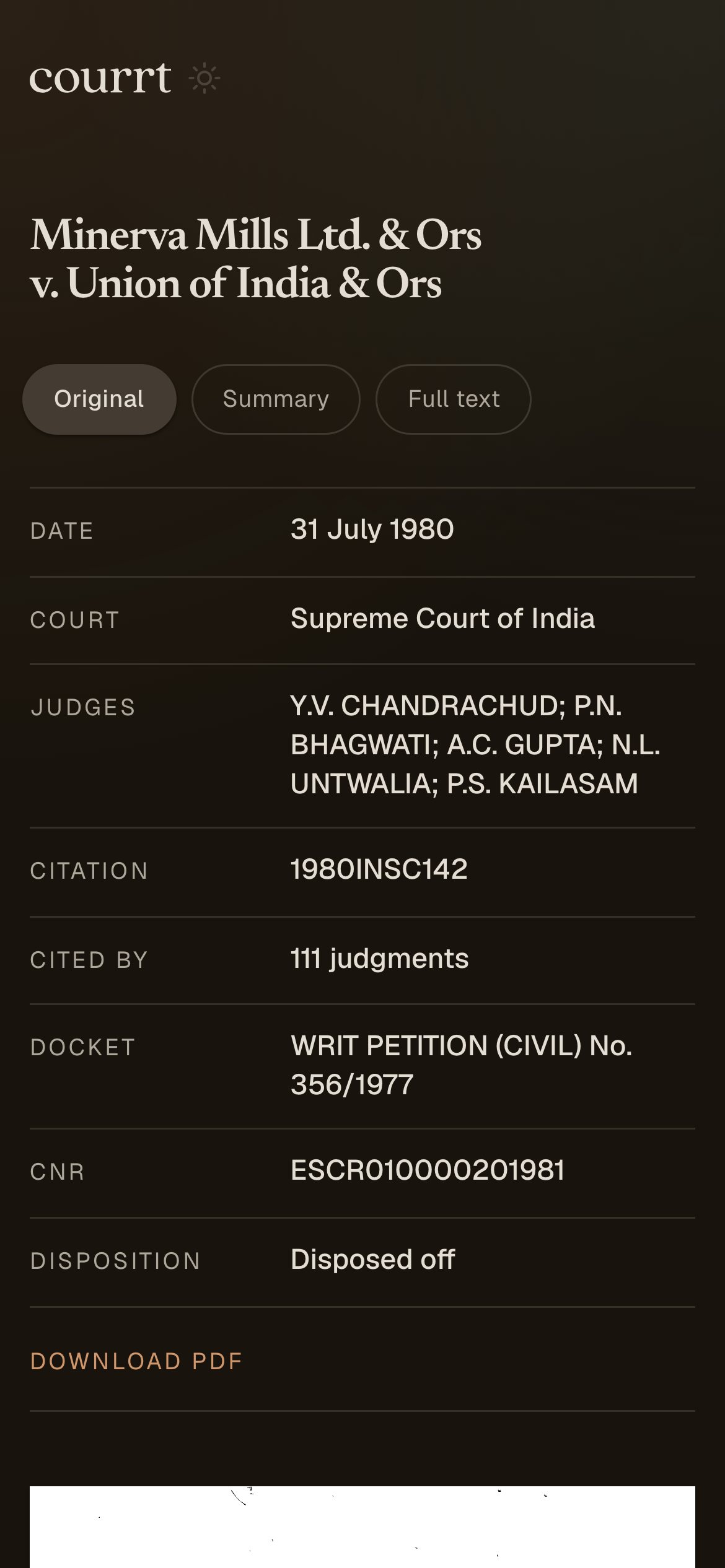
Open a case and the facts sit on the left: date, court, judges, citation, docket, CNR, disposition. The original court PDF sits on the right.
Switch to a summary of what the court held, or the full text.
"Every result traces back to the source; nothing is invented." — courrt.com/about
04
The corpus covers the Supreme Court and 25 High Courts, with metadata for every judgment and full text pulled verbatim from the official PDFs.
05
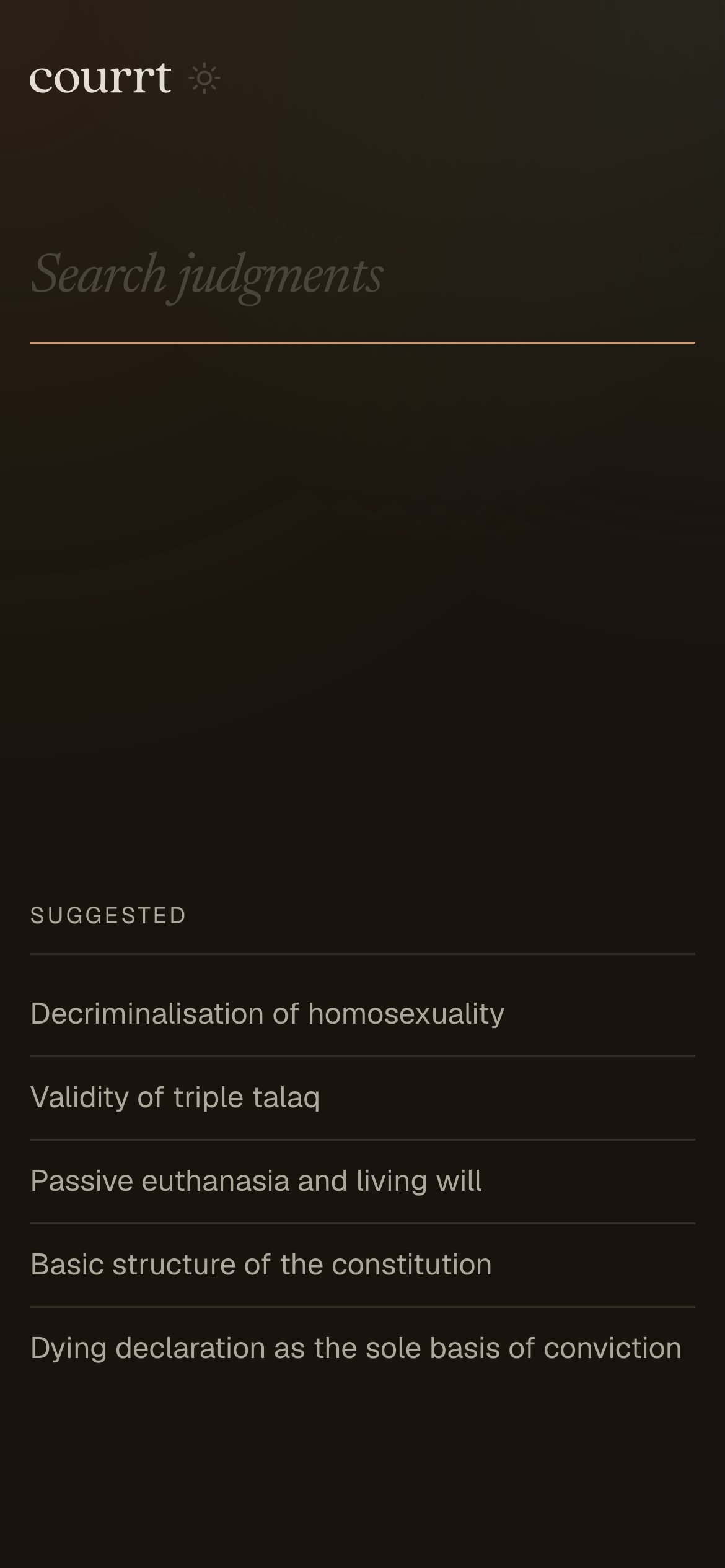
The full search and reading layout works on mobile, and a toggle next to the wordmark switches every screen between light and dark mode.
06
The same corpus runs as a public, read-only MCP server, so Claude or ChatGPT can search and cite these judgments directly. No account, no sign-in. Add https://mcp.courrt.com/mcp as a custom connector.
07
A search engine for Indian case law: ~43,500 Supreme Court and ~17.9 million High Court judgments, plus ~36,000 Acts, Rules and Notifications.
Courrt is our own product. We did the product design, the website and the engineering.
A single search box on the homepage, filterable results with citation counts, and each judgment shown beside its original court PDF with a one-click summary and dark mode throughout.
Judgment text is extracted verbatim from the official PDFs, which come from public eCourts records under CC-BY-4.0. Editorial summaries are labelled, and scans that can't be read yet link to the original instead of guessing.
Through a public, read-only MCP server, so Claude and ChatGPT can search and cite judgments directly. No account needed.