Classified
Somewhere in an industrial estate there is a steel tank full of liquid oxygen, and nobody at head office knows much about it. Who supplies it. What it feeds. Whether the contract is up.
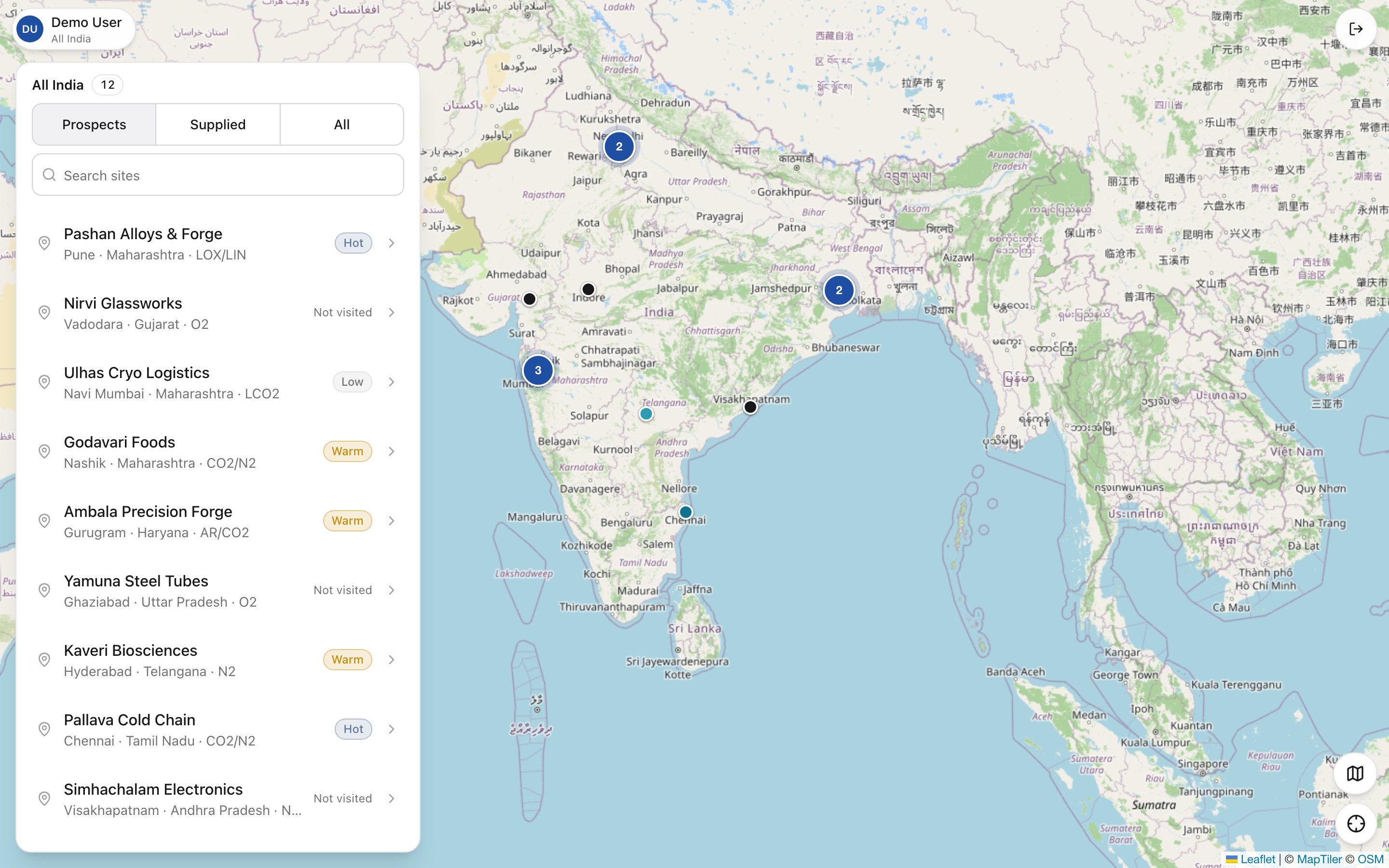
This is how their gas sales team finds out. Every tank in the territory sits on a map; a rep drives to one, walks the site, records what they see. Signal or no signal, by the time they're back in the car it's counted.
Real app, real screenshots, invented data. The client isn't named.
01
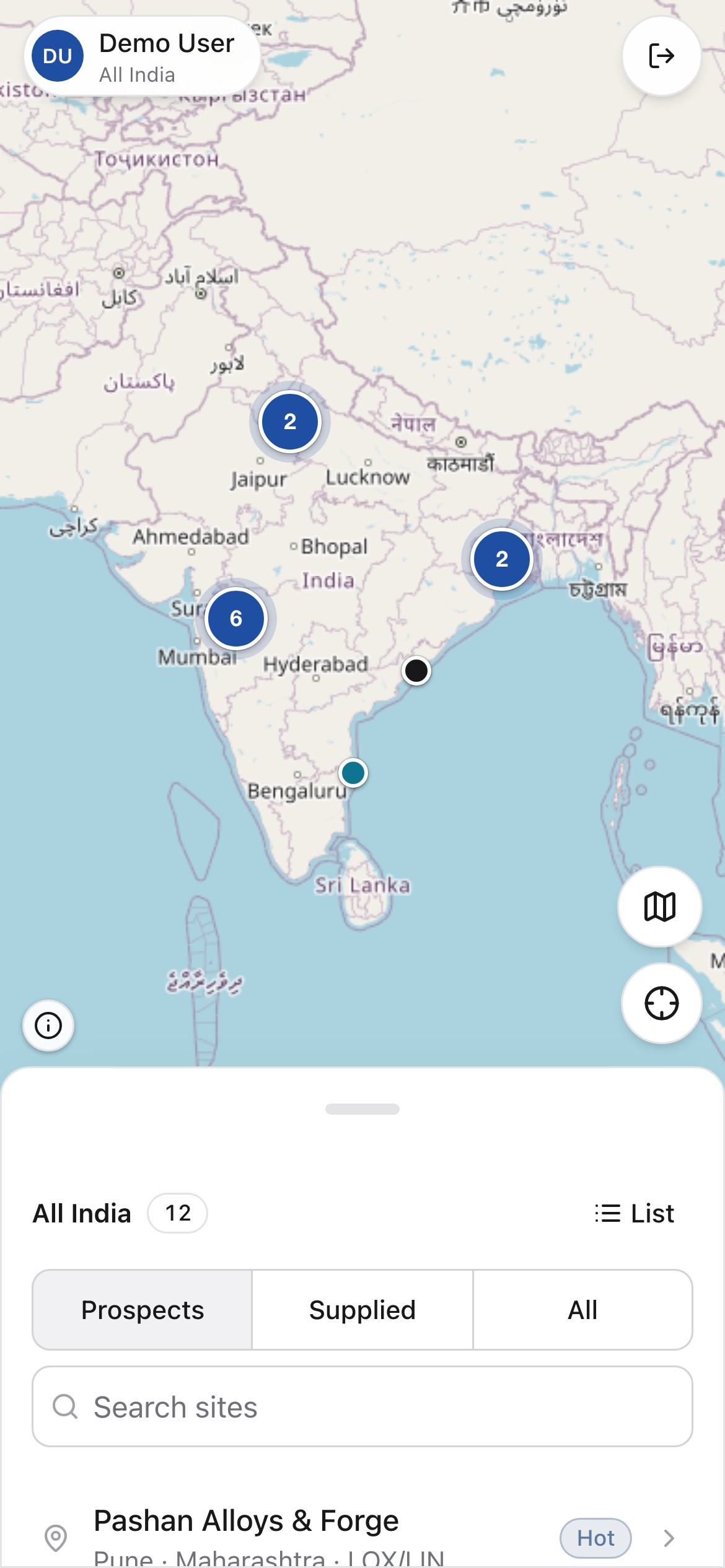
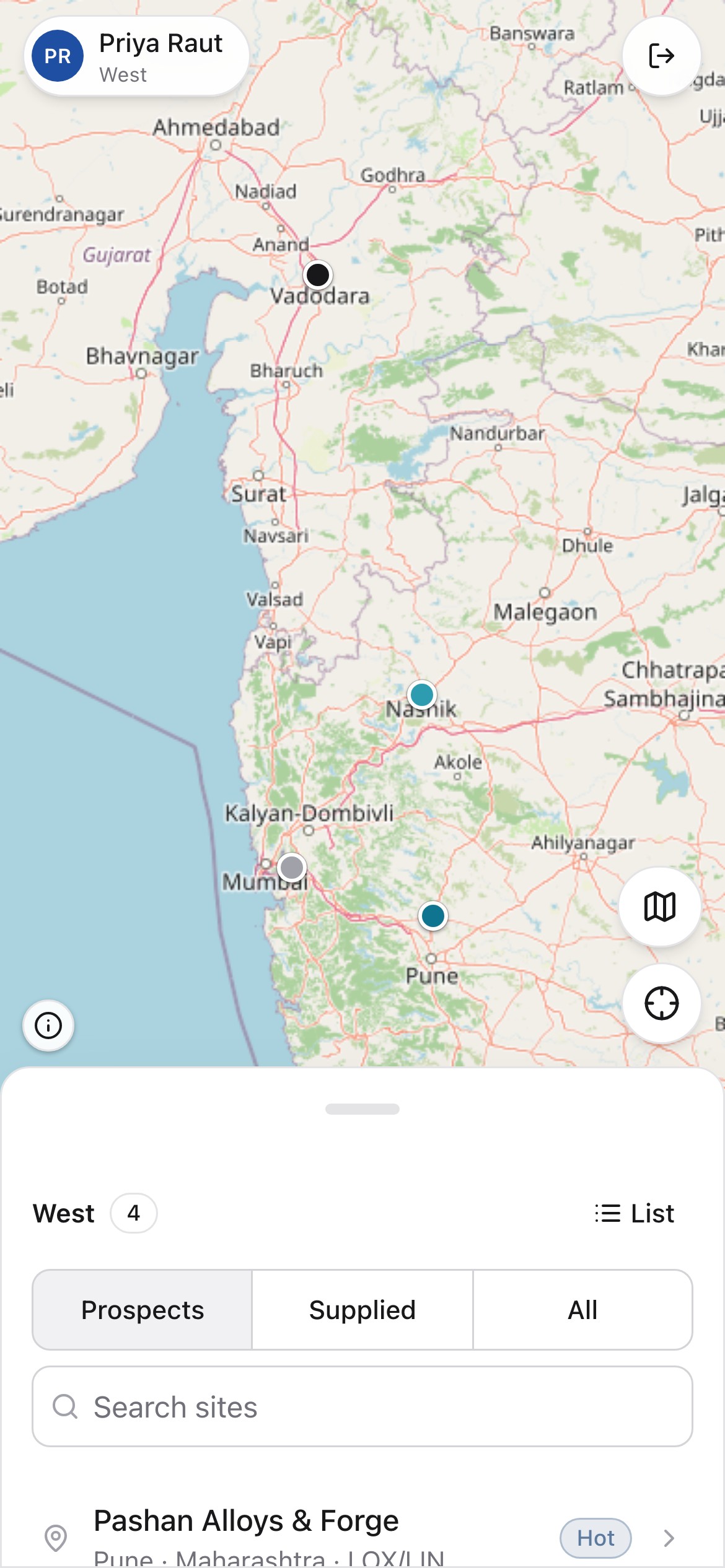
The app opens on the territory. Tanks are dots, coloured by how warm the opportunity is. Zoom in far enough and the map turns to satellite, because at an industrial estate the useful question is "which gate?".
You see your region and nobody else's: not a setting, just what comes down with your login.


02
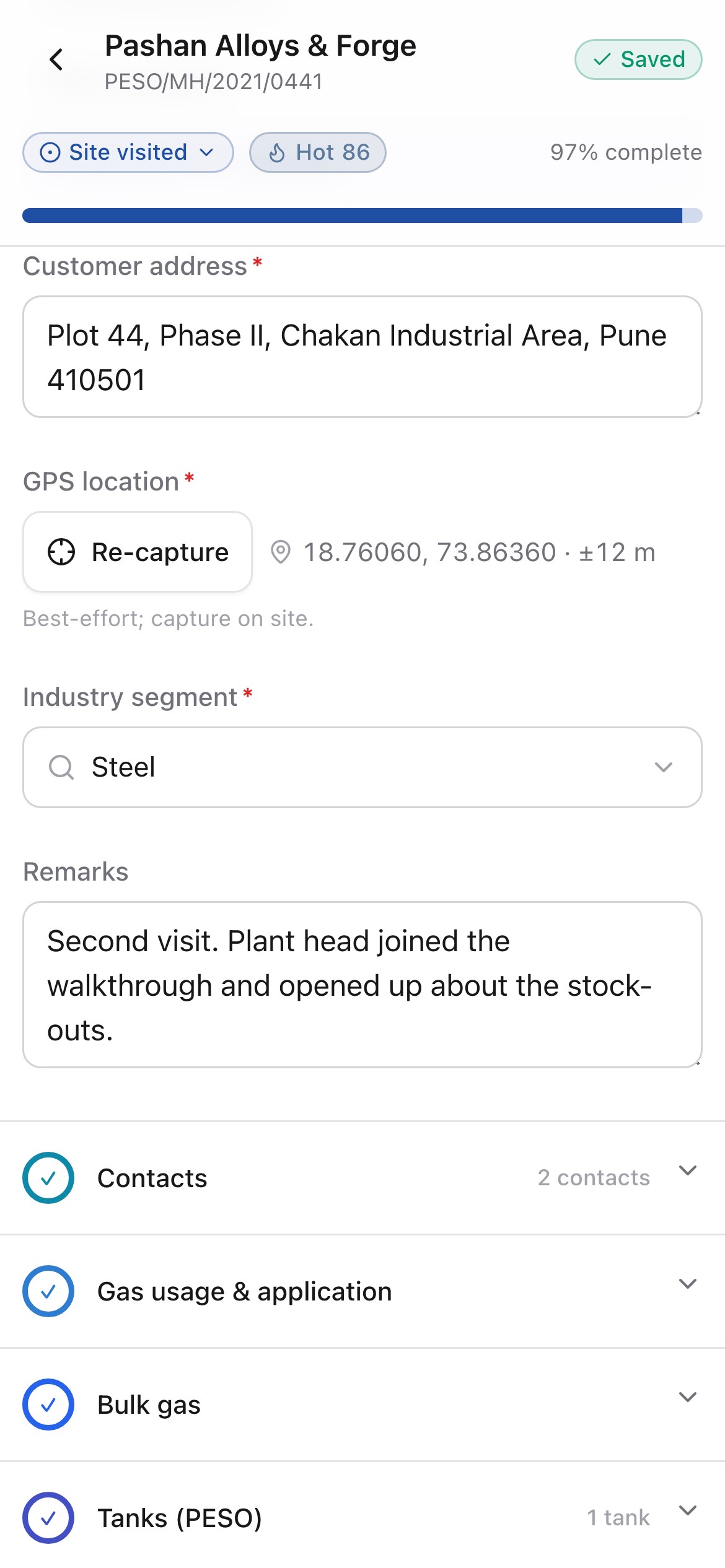
The client's questionnaire runs to roughly 185 questions, the kind of document that quietly never gets filled in.
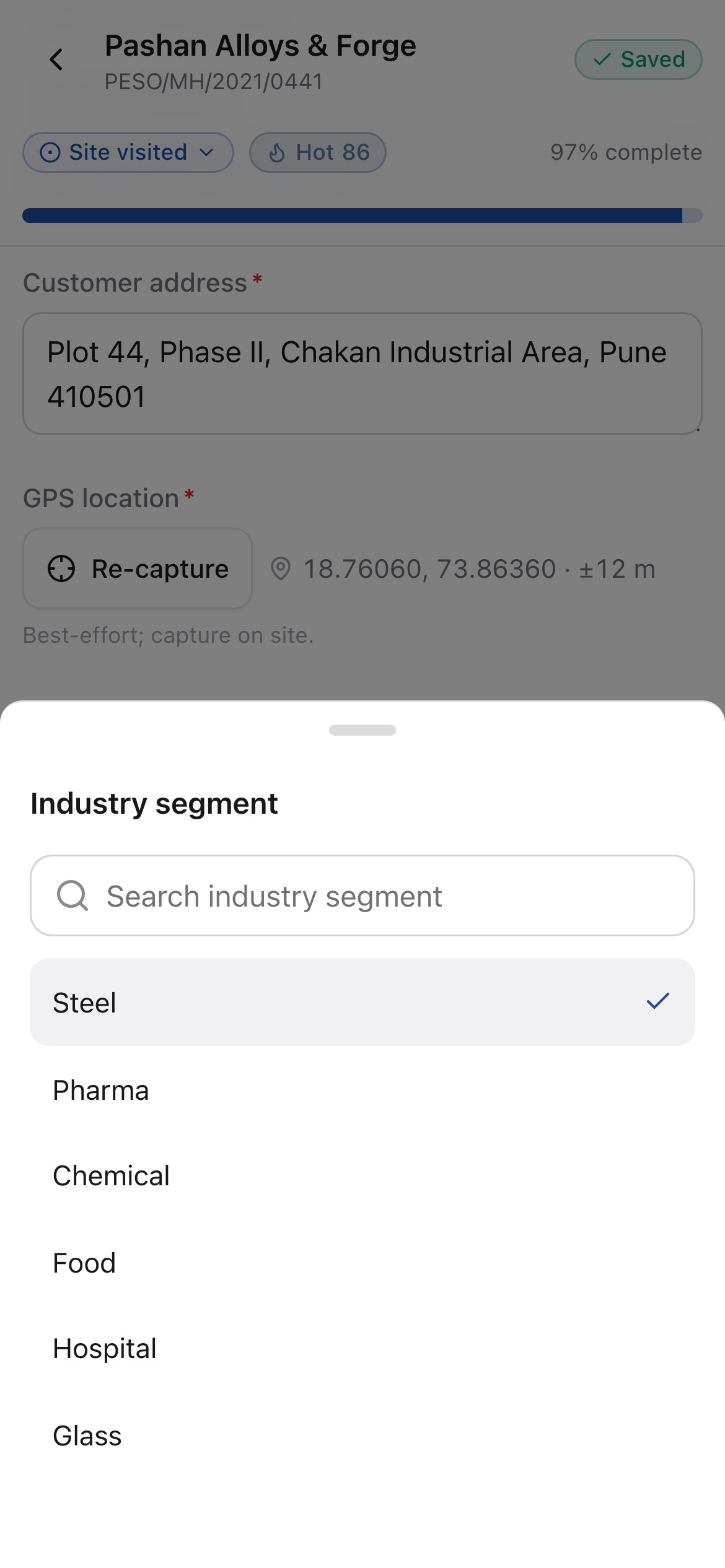
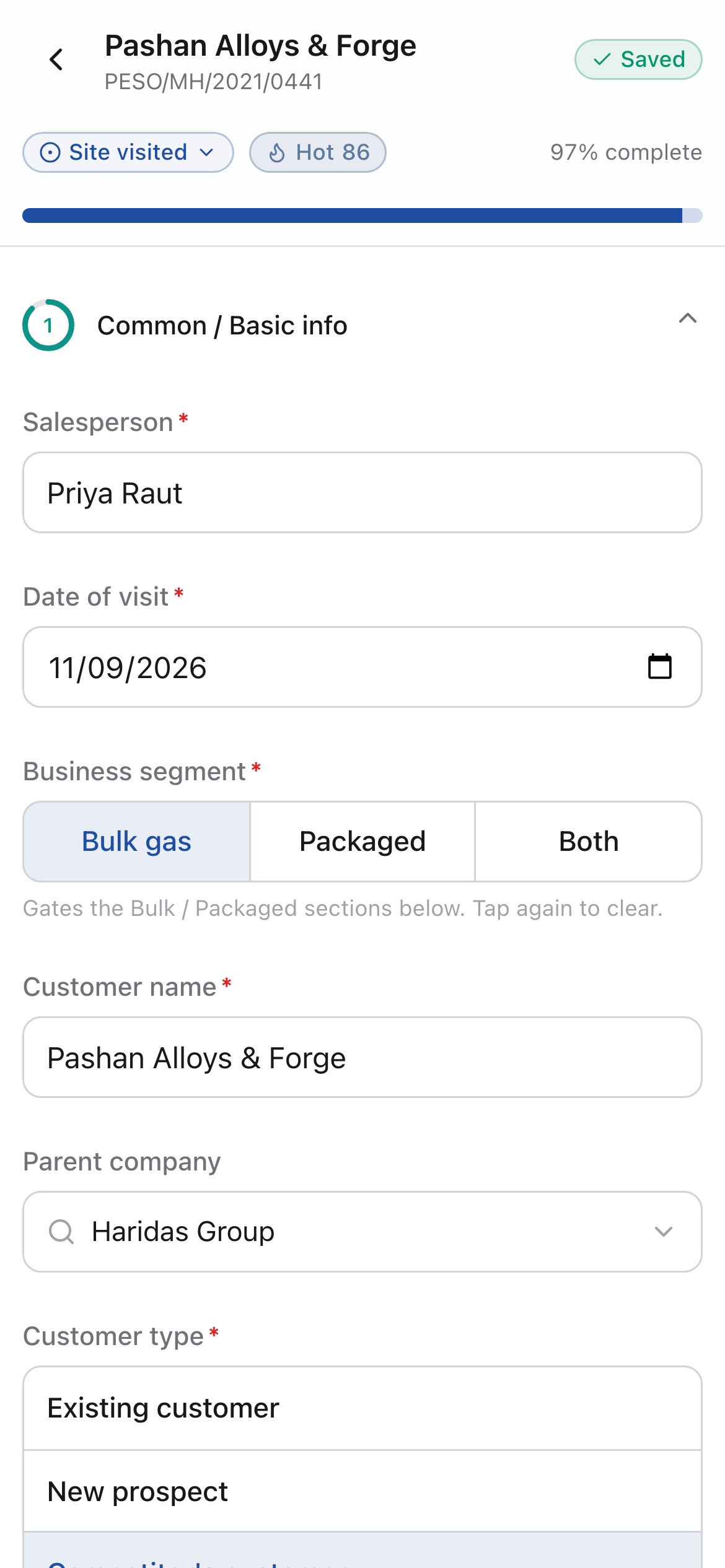
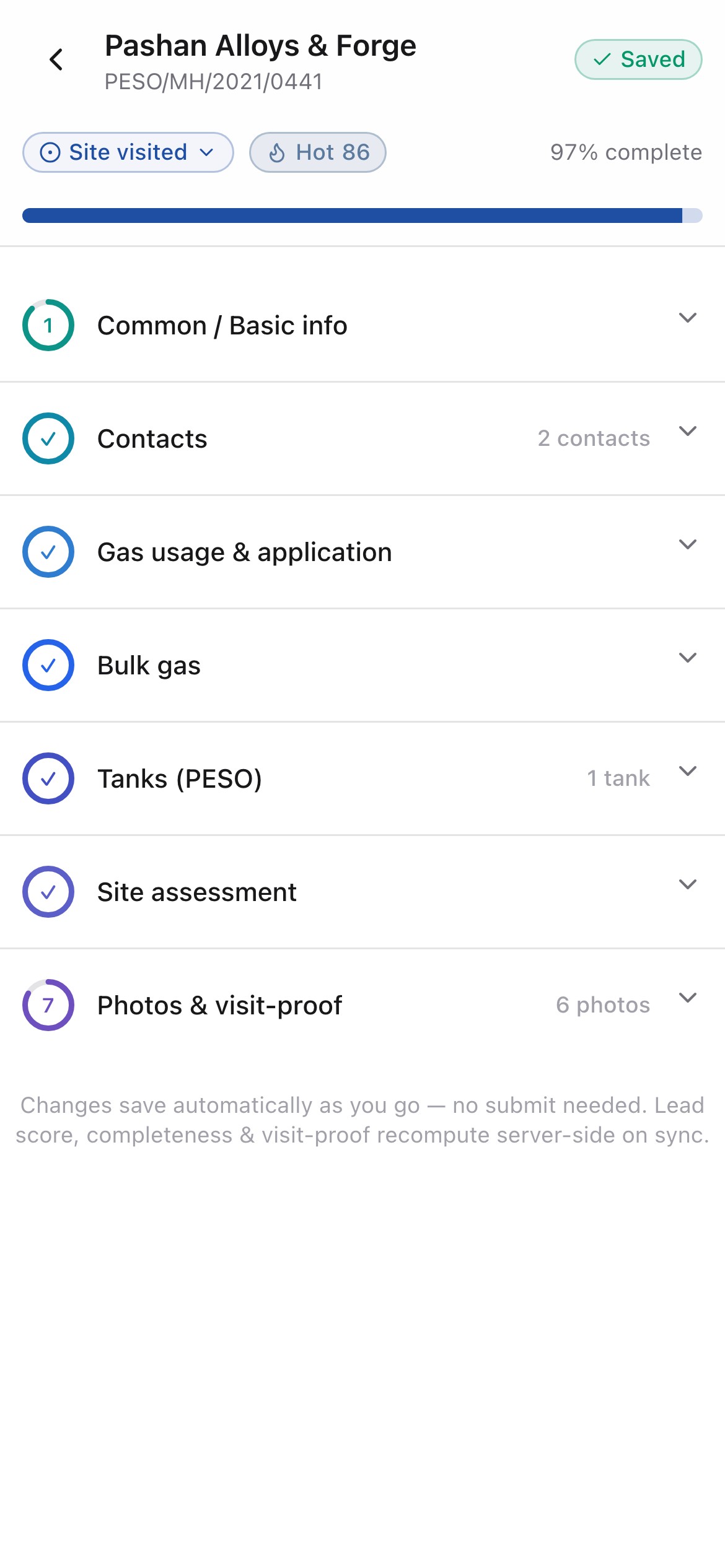
So the app never shows you 185 of anything. One answer near the top, bulk gas or cylinders, decides which half of the form exists. No tank on site, and the tank section folds away. There's no submit button either: it saves on every keystroke.


03
Reps are paid on what they collect, which creates an obvious temptation: fill it in from the car park.
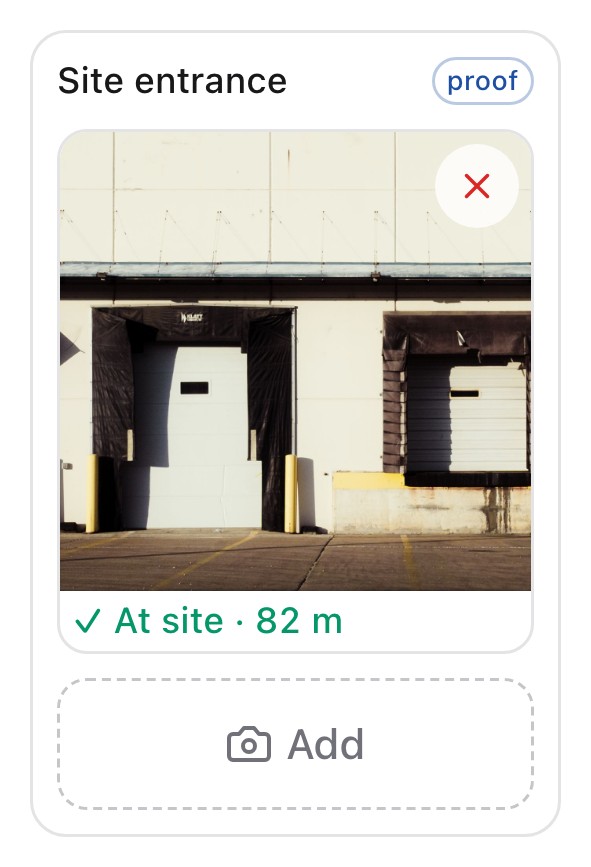
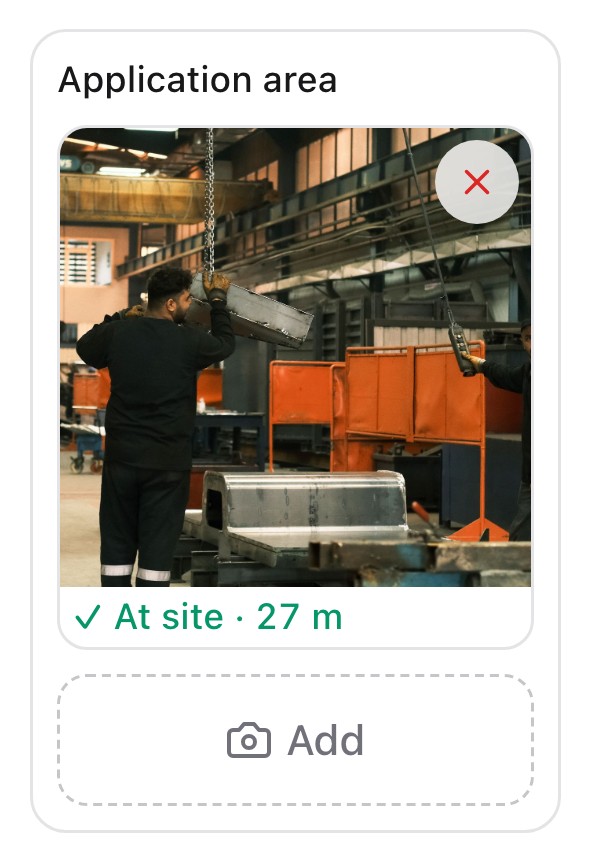
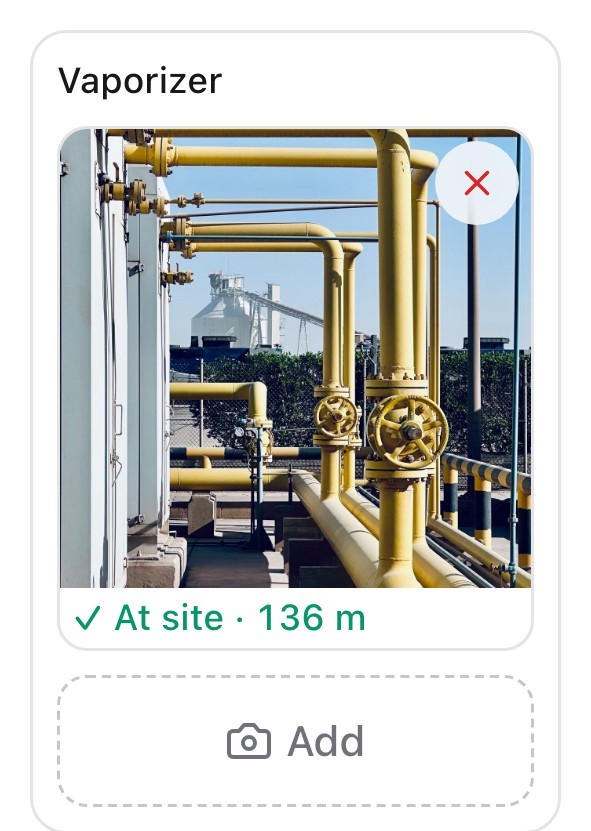
So the camera opens inside the app, and the phone's live position is stamped on the shot as the shutter fires, rather than read from the file where it can be edited. The app grades its own evidence: at site, nearby, unverified.
It doesn't block anyone, since sites are large and GPS is bad indoors. The verdict just travels with the capture, and the regional head sees it.


04
The rep and their manager open the same site and see two different apps.
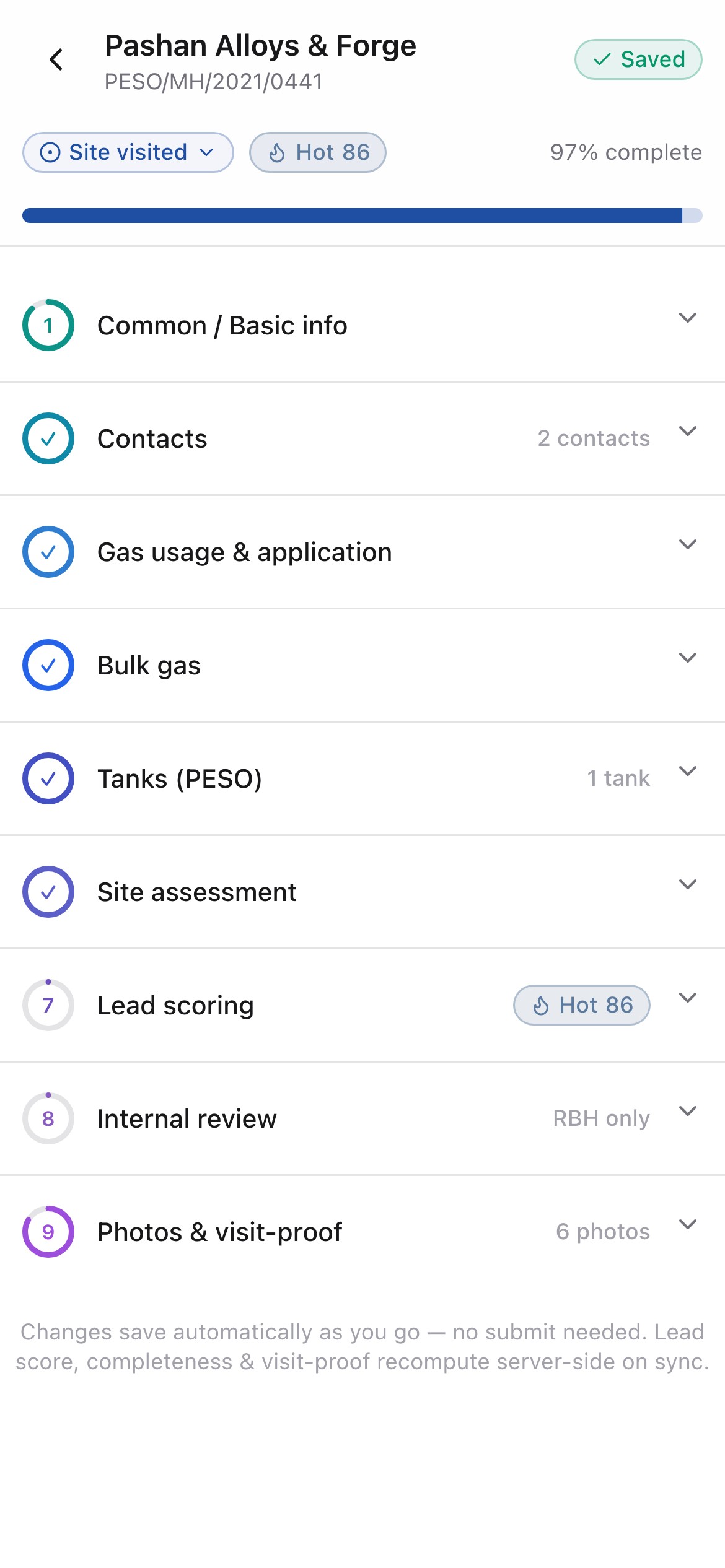
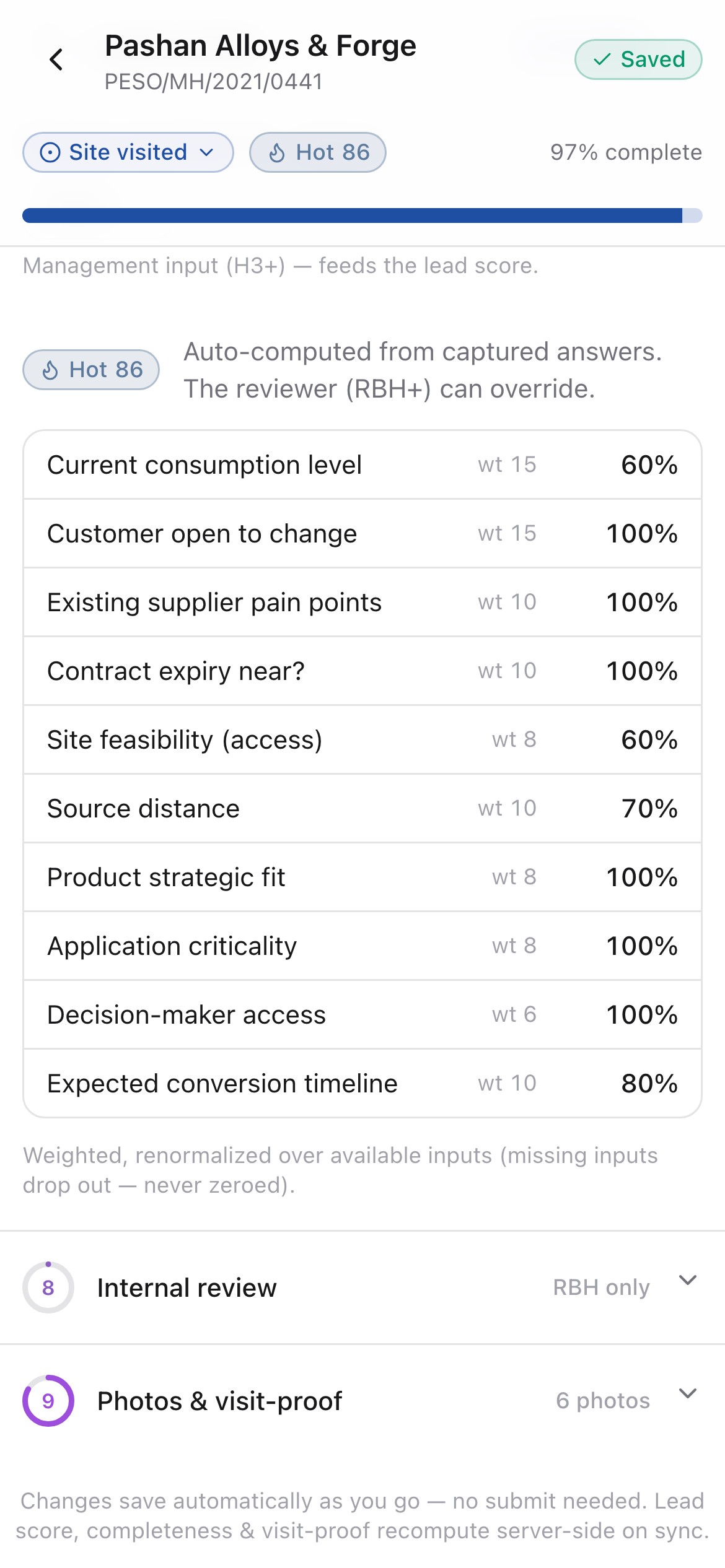
A rep sees seven sections. Their regional head sees those plus two more: the lead score, and an internal layer holding margin, freight, credit risk and capex.
None of it is secret, since everyone here works for the same company. It's hidden because a rep who knows the margin will negotiate against it, and because credit risk: high is awkward to have on screen while the customer reads over your shoulder.


05
Which is a problem, because reps are paid on the data that comes out of this app. Losing a site visit to a dead zone isn't an inconvenience; it's someone's money.
So nothing waits for the network. Every answer is written to the phone first, then queued, and the queue drains on its own when signal returns.
06
If you need something like it built (a field sales app, a site survey tool, or an offline-first capture system for people who work away from a desk), this is the shape of it.
07
An installable field sales app for a national industrial gas business. Reps visit sites with cryogenic tanks and record what they find, building a picture of a market the company knew only second-hand.
All of it: product definition, data architecture, design system and build. We started from a 185-question client questionnaire and an authorisation matrix, and worked out what the app in between should be.
Reps' incentives are tied to this dataset, and any delete button eventually becomes an argument. Corrections are edits that keep their history. Nobody has delete rights: not a regional head, not the MD's office, not us.
The customers, the tanks and the sales team belong to the client, not to us. So we ran the real app on invented data and photographed that. The interface, the logic and the lead score are genuinely the app's; only the facts are fiction.
Two slots stay empty for a different reason: a nameplate carries a real serial number, a PESO licence is a government document. Publishing one exposes a real company's assets; faking one fakes an official record.